

Auxiliaries by process stage
Dyes get the attention, but most of what happens in a wet-processing mill depends on the auxiliaries around them. Here is how they group by stage.
Welcome to Asahi Dyes and Chemicals, a name in the chemical industry dedicated to improving textile chemical processing. Our textile auxiliaries are made to support every step of the process and to give the quality and performance mills expect.
Our commitment. We provide innovative solutions for the changing needs of the textile industry. Our auxiliaries are made with precision and backed by research and development, so that results meet expectations.
Pre-treatment auxiliaries
Purpose
Used at the start of processing to prepare the fabric for dyeing and printing. This stage removes impurities, natural oils and anything left over from weaving, so colour goes on evenly.
Key components
- Desizing agents: remove the size applied during weaving
- Scouring agents: help remove natural waxes, oils and other impurities
- Bleaching agents: give a clean, uniform white base by removing natural colour and impurities
Dyeing auxiliaries
Purpose
Used while the fabric is being coloured. They help the dyeing run uniformly and without trouble.
Key components
- Levelling agents
- Crease inhibitor
- Defoaming agent
- Wetting agent
- Dye bath conditioner
- Core neutralizer
- Washing-off agent
- Chlorine protection agent
- Reserving agent
Printing auxiliaries
Purpose
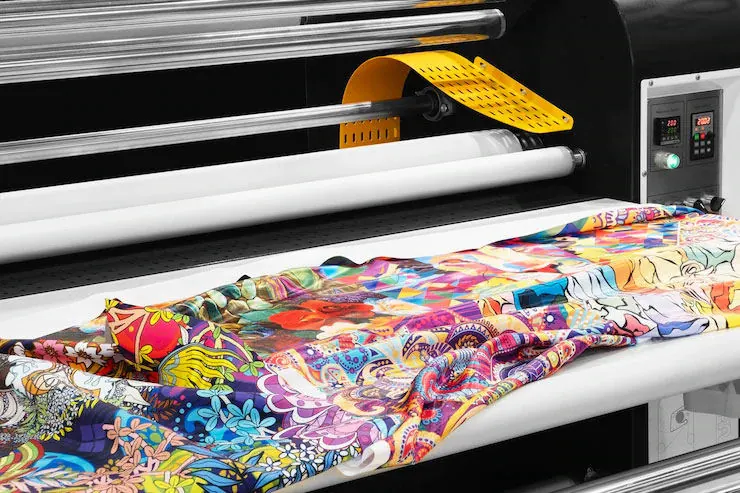
Used when patterns and designs are applied. They help prints come out sharp, durable and well defined.
Key components
- Rheology modifier
- Defoaming agent
- Wetting cum penetrating agent
Process control auxiliaries
Purpose
The troubleshooters. They are added during pre-treatment, dyeing or printing to prevent unforeseen problems and keep processing smooth.
Key components
- Chelating agent
- Acid buffer
- Reserving agent
- Single bath scouring and dyeing agent
- Dye bath conditioner
Finishing chemicals
Purpose
Applied at the final stages to give the fabric specific properties and improve its feel, appearance and performance.
Key components
- Softener
- Resin and crosslinkers
- Oil and water repellent
- Soil release agent
- Fluorine-free water repellent finish
- Anti-soiling agent
- UV absorber
- Flame-proofing agent
Describe the problem. We will help you find the cause.
Tell us the fibre, the machine and what is going wrong, and our technical team will suggest where to look.
Tell us the fibre, shade depth and process.
Our technical team will point you to the right range. Write to info@asahidyes.jp or call +81-78-858-6707.